
CORE Summit · Thursday, May 7, 2026
Funding & growth
strategies
Capital, support, and the math behind launching well.
Thank you to our sponsor


Two sessions on funding & growth.
How Much Money Do You Actually Need?
Realistic capital planning for cannabis startups — essentials, optional spend, and the cash-flow gaps that derail new businesses.
Using Technical Assistance to Save Time & Money
How to use TA to reduce costs, avoid mistakes, and grow smarter.

Session 01
How Much Money
Do You Actually
Need?
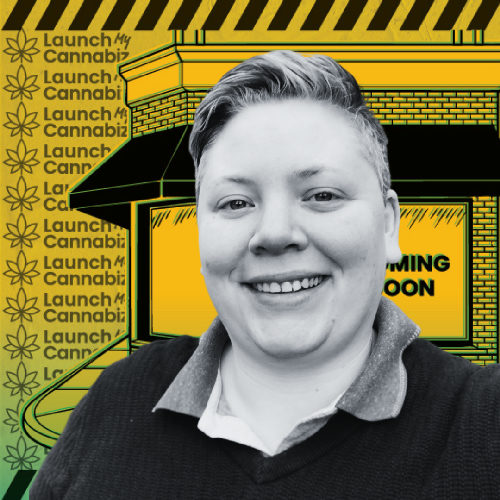
Presenter
Monica Colgan
Launch Industries · CORE Technical Assistance Team

Financial Frameworks
Kenneth Mason
CPA · Equibis Accounting
Honest math, fewer surprises.
The number you have in mind is probably half of what you actually need
— Kenneth Mason, CPA · Equibis Accounting
Two budgets, not one.
Budget 01
Startup capital
Gets you open. One-time costs to license, build out, install security, set up POS, and stock the shelves.
Budget 02
Working capital
Keeps you alive. 6–18 months of payroll, rent, compliance, and taxes before revenue stabilizes.
Most operators raise enough for the first. They forget the second. That’s where most fail.
The gap between startup costs and what you actually need to raise.
This is where most cannabis businesses die — not from a bad concept, but from cash running out before the model works.
What it actually takes to open the doors.
Excludes building / real estate. CA 2024–2025 ranges. Low = lean suburban build. High = full-featured urban (LA/SF-style).
🏪 Retail (Type 10 — Storefront)
Typical raise: $350K
Build-out and initial inventory are the biggest line items.
🌱 Cultivation (Type 2A — 5K sq ft indoor)
Typical raise: $800K
Build-out, HVAC, and electrical drive the cost.
🚗 Delivery (Type 9)
Typical raise: $175K
Lowest barrier — but vehicles, insurance, and a licensed hub are required.
What it costs every month, before you sell a thing.
Operating costs only — product cost (COGS) is on top. This is what your reserve has to cover.
🏪 Retail
per month
Payroll dominates. Local cannabis tax adds another 4–15% of gross.
🌱 Cultivation
per month
Electricity is the #1 driver — 5K sq ft uses 20–50K kWh/month.
🚗 Delivery
per month
Lower fixed costs but vehicles, fuel, and W‑2 drivers eat margin.
months
Most operators assume 6–12.
Plan for double or triple that. Your reserve must bridge this gap.
effective federal tax rate
Cannabis businesses can’t deduct most operating expenses at the federal level — only COGS.
April 2026: medical cannabis moved to Schedule III — 280E now applies to adult-use only. CA’s state-level decoupling (AB 37) expired Dec 31, 2024.
A business that looks profitable on paper can owe more in taxes than it earns. Get a cannabis-specific CPA before you spend a dollar.
Four costs that quietly compound.
280E pushes federal tax to 40–70%.
No deductions for rent, payroll, or marketing — only COGS. The effective federal tax rate ends up 2–3× a normal business.
CA excise — 15% of retail sales.
Frozen at 15% through June 2028 (AB 564). Collected from customers and remitted — flows through your P&L but isn’t your money.
City cannabis tax — 4–15% of gross.
Sacramento sits at 4% — below the state average. Often the third or fourth biggest monthly cash drain.
Cannabis banking — $1.5K–$5K/mo.
Most banks won’t touch cannabis. Specialty credit unions charge a premium for compliance.
Three things that quietly extend your runway.
6–18 months in CA.
Rent and overhead run the entire time. Build pre-opening burn into your startup total.
$75–$300 / sq ft.
Gray shell vs. existing retail = $100K–$250K difference. Fire safety retrofits commonly add another $90K. Cultivation runs higher.
Not optional.
METRC, cannabis CPA, and a cannabis attorney from day one. Suspended licenses kill businesses.
Five moves that protect your raise.
- 01Plan two budgets, not one. Startup costs and working capital are separate exercises.
- 02Add 6–12 months of operating costs as your survival reserve.
- 03Hire a cannabis-specific CPA before you spend a dollar — 280E will eat you alive otherwise.
- 04Build the 6–18 month licensing wait into your budget. Rent doesn’t pause.
- 05Get a real financial model built for your situation. The ranges are a starting point, not a number.
Leverage your supports.
Permit fee waivers.
Reduction or full waiver of initial local cannabis permit fees for verified CORE participants.
Direct TA funding.
Free help on legal compliance, accounting, taxes, HR — backed by a 2025 $2.5M state grant via Go-Biz.
Social consumption pilot.
Sacramento is among the first cities developing a cannabis lounge pilot — new revenue for Type 10 retailers.
Session 02
Using Technical
Assistance to Save
Time and Money

Presenter
Dr. Dene Starks-McGee
Launch Industries · CORE TA Team
Learn how to use TA programs to reduce costs, avoid mistakes, and grow smarter.
A practical guide to getting more out of the support that's already available to CORE participants.
Expert support for your business.
Technical Assistance programs provide free or low-cost professional guidance to help businesses grow and stay compliant.
Think of TA as having a team of advisors — without paying full consulting rates.
How TA saves you time and money.
Offset consultant costs.
Instead of paying consultants for every task, TA can offset the cost.
Skip trial and error.
Get pointed in the right direction faster.
Catch the expensive ones early.
Incorrect paperwork, weak projections, missed deadlines, and poor systems can cost thousands.
Learn the work, not just the answer.
TA teaches you how to do things — not just what to do.
Smart founders use support before problems happen.
What TA actually saves you.
Based on the California Cannabis Cost Reference (Kenneth Mason, Equibis · 2024–2025).
01 · Replacement
$25K–$50K
in consulting fees offset.
Business plans (~$9K), financial projections, marketing strategy ($5–$15K), accounting setup, pre-opening training ($14K), CFO setup ($9K).
02 · Prevention
$20K–$60K+
in expensive mistakes avoided.
Wrong CUP, weak applications, bad entity structure, missed deadlines. Each one costs months of pre-opening rent at $9K–$30K/month.
03 · Acceleration
3–6 months
faster to revenue.
Cleaner applications and avoided bottlenecks. Every month saved is rent and overhead you don’t burn.
TA savings by expense type.
Across business types, TA can offset these costs — whether you’re retail, cultivation, or delivery.
$5K–$15K
Business planning & financial modeling.
Business plan, financial projections, CFO setup ($9K typical), pricing & margin analysis, capital readiness prep.
$5K–$15K
Application & entity prep.
Cannabis attorney prep ($8–$25K range), business formation, local permit / CUP guidance, compliance setup.
$5K–$15K
Strategy, brand, & launch.
Marketing strategy ($5–$20K range), brand positioning, launch planning, Leafly/Weedmaps setup, customer acquisition basics.
$10K–$25K
Setup & pre-opening training.
Pre-opening training ($14K typical retail / $17K cultivation), POS / accounting / banking selection, METRC onboarding, vendor referrals.
Hidden costs TA helps you avoid.
The line items most commonly under-budgeted. TA helps you plan for them — or avoid them entirely.
Licensing takes 6–18 months. Rent runs the whole time.
Retail rent: $9K–$30K/mo. Cultivation: $5K–$20K/mo. Every extra month of delay is pure burn. TA helps you submit cleaner applications — first try.
Wrong CUP, weak narrative, missing docs.
Each rejection or revision = 3+ months added to your timeline. TA reviews applications before submission and helps you tell the right story to your city.
Wrong POS, bank, lawyer, or CPA.
A bad fit costs $500–$2K/month in unnecessary fees and re-work. TA has vetted vendor referrals and can save you 12+ months of suboptimal contracts.
METRC errors, security gaps, packaging mistakes.
Suspended license = catastrophic. Failed batch test = $100K–$250K in destroyed product. TA helps you set up compliance right from day one.
Best uses of TA for CORE participants.
Use TA before spending money on outside help.
Use paid consultants only when specialized execution is truly needed.
How to maximize your TA experience.
Come prepared.
Bring questions, documents, and clear goals.
Take action quickly.
Implement recommendations between sessions.
Use multiple sessions.
Growth happens through consistency.
Ask for resources.
Templates, tools, referrals, checklists, and examples.
Final thought
Businesses that ask
for help early grow faster
— and waste less
Use the support already available to you.
Entrepreneurship Program
LaunchMyCannabiz™
Entrepreneurship Program Series
Empowering entrepreneurs to build, launch, and scale successful cannabis businesses.
Contact us to enroll: hello@launchmycannabiz.com
Thank you