
CORE Summit · Thursday, May 7, 2026
Licensing & compliance
Navigating Sacramento's cannabis licensing process.
Thank you to our sponsor


Three sessions on licensing & compliance.
Licensing Flow: From Concept to Approval
Sequencing, dependencies, and where delays commonly happen.
Application Requirements & Common Pitfalls
Frequent application errors that cause delays or denials — and how to avoid them.
Timelines, Reviews & What Happens Behind the Scenes
Review stages, inter-departmental coordination, and realistic expectations.
What you'll leave with.

Session 01
Licensing Flow:
From Concept
to Approval
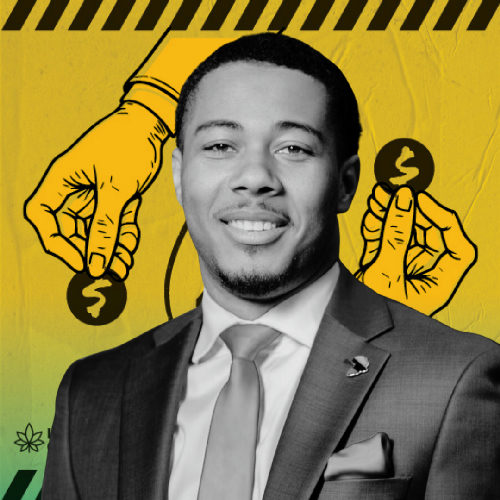
Presenter
Khalil Ferguson
Launch Industries · CORE Technical Assistance Team
Understanding the licensing flow.
High-level overview
A clear walkthrough of the licensing and permitting process end to end.
Sequencing & dependencies
The official flow — what comes first, what blocks what, where holds happen.
Where delays happen
The points in the process most likely to slow you down — and why.
Cannabis license categories in California.
- Type 7 — Volatile Solvent Extraction
- Type 6 — Non-Volatile / Mechanical
- Type N — Infusion
- Type P — Packaging & Labeling
- Type S — Shared Manufacturing
- Storefront
- Delivery
- Outdoor
- Indoor
- Mixed-Light
- Event Organizer
- Temporary Cannabis Events
- Type 11 — Distributor
- Type 13 — Transport Only
What the city needs from you.
Conditional Use Permit
Occupational Use Permit
a.k.a. Certificate of Occupancy.
Business Operating Permit
State License
Individual eligibility.
A current or former Sacramento resident from a low-income household who was either (a) arrested or convicted for a cannabis-related crime in Sacramento between 1980–2011, or (b) an immediate family member of someone who meets that criteria.
A current or former Sacramento resident who lived in a low-income household for at least 5 years between 1980–2011 in any of the following ZIP codes:
95811 · 95815 · 95817 · 95818 · 95820 · 95823 · 95824 · 95826 · 95828
Business eligibility.
Cannabis business with at least 51% ownership by Classification 1 or 2 individuals residing in the city district where the business is located — or, if no such individuals exist, from other applicable areas.
A cannabis business that is a CORE Incubator.
A Cannabis Social Enterprise with at least 51% ownership by individuals meeting Classification 1 or 2 criteria.
Equity Fee Relief: two requirements.
Meet both and your business is eligible for a state equity fee waiver.
Gross revenue
No more than $5M per year. New businesses must expect under $5M in their first year.
Equity ownership
At least 50% owned by people who qualify on cannabis conviction/arrest history, residence in disproportionately impacted areas, or income criteria (CalFresh, MediCal, CalWORKS, SSI/SSDI, or under 60% of area median income).
Session 02
Application
Requirements &
Common Pitfalls
Presenter
Khalil Ferguson
Launch Industries · CORE Technical Assistance Team
Stronger applications, fewer surprises.
Documentation needed for the local application.
What the state needs in your application.
- · Legal business name
- · Legal first & last name of applicant (must be an owner)
- · Trade names, fictitious names, DBAs
- · License type & designation (medicinal / adult-use / both)
- · Premises address or APN
- · Mailing address, if different
- · Phone number & website
- · FEIN, ITIN, SSN, or NIN for federal taxes
- · Designated responsible party contact info
- · Agent for service of process info
- · Organizational structure (LLC, partnership, etc.)
- · Valid CDTFA seller's permit number
- · SEIN from EDD, if applicable
State documentation requirements.
- Evidence of legal right to occupy and use the proposed location (§ 15007).
- A premises diagram (§ 15006).
- Surety bond of at least $5,000 per premises payable to the State of California (aggregated bond OK across multiple licenses).
- Limited waiver of sovereign immunity (§ 15009), if applicable.
- Evidence of CEQA compliance (§ 15010).
- Foreign corp/LLC certificate of qualification, registration, or status from CA Secretary of State (if applicable).
- Complete list of every owner (§ 15003) and all financial interest holders (§ 15004).
- Optional: a license, permit, or authorization from the local jurisdiction. If provided, the local jurisdiction has 10 calendar days to confirm validity.
Where applications stumble.
Underestimating the landscape.
Market dynamics, the regulatory environment, and the supply chain — especially how they interact.
Capital restrictions.
Banking limitations, reduced lending options, and high startup capital requirements.
Complex regulatory environment.
Overlapping local, state, and federal rules — and the cost of getting any of them wrong.
General business issues.
Contracts, employment law, audits and recordkeeping, and tax obligations.
Unenforceable provisions.
Boilerplate clauses that don't hold up in cannabis-specific contexts.
Detail wins.
Most pitfalls are avoidable with rigorous documentation and early planning.
Session 03
Timelines,
Reviews & What
Happens Behind
the Scenes
Presenter
Khalil Ferguson
Launch Industries · CORE Technical Assistance Team
Demystifying the review process.
Get in touch
Presenter
Khalil Ferguson
Launch Industries · CORE Technical Assistance Team
Entrepreneurship Program
LaunchMyCannabiz™
Entrepreneurship Program Series
Empowering entrepreneurs to build, launch, and scale successful cannabis businesses.
Contact us to enroll: hello@launchmycannabiz.com
CORE Summit · Thursday, May 7, 2026
Thank you
For joining us at the Summit Learning Sessions.